Vibrating Casting Cooling Conveyors
Foundry and Metalcasting Solutions
Cooling Conveyors
Conveyors
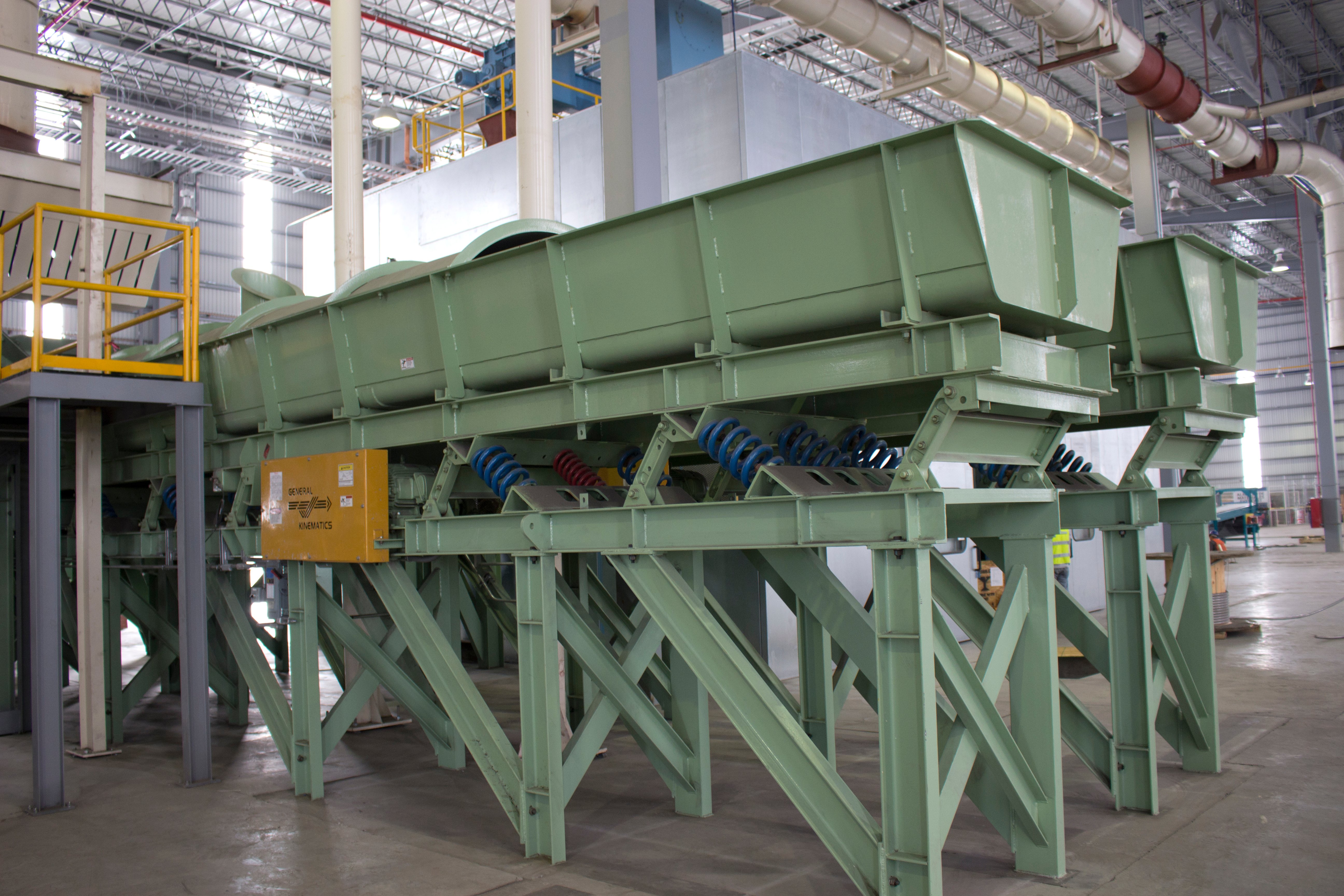



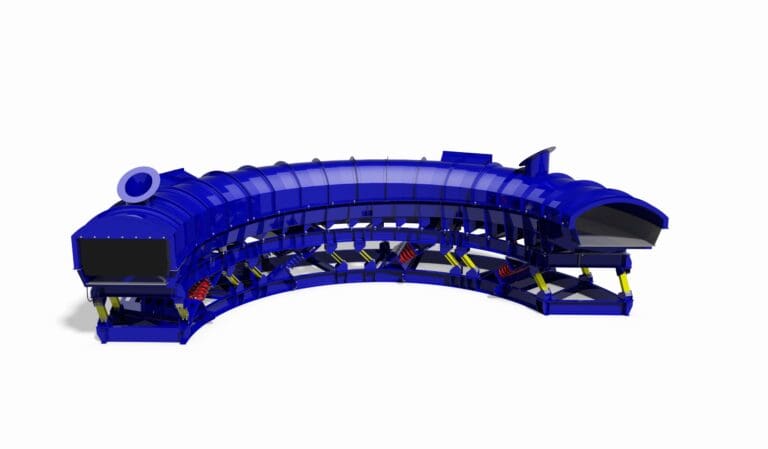


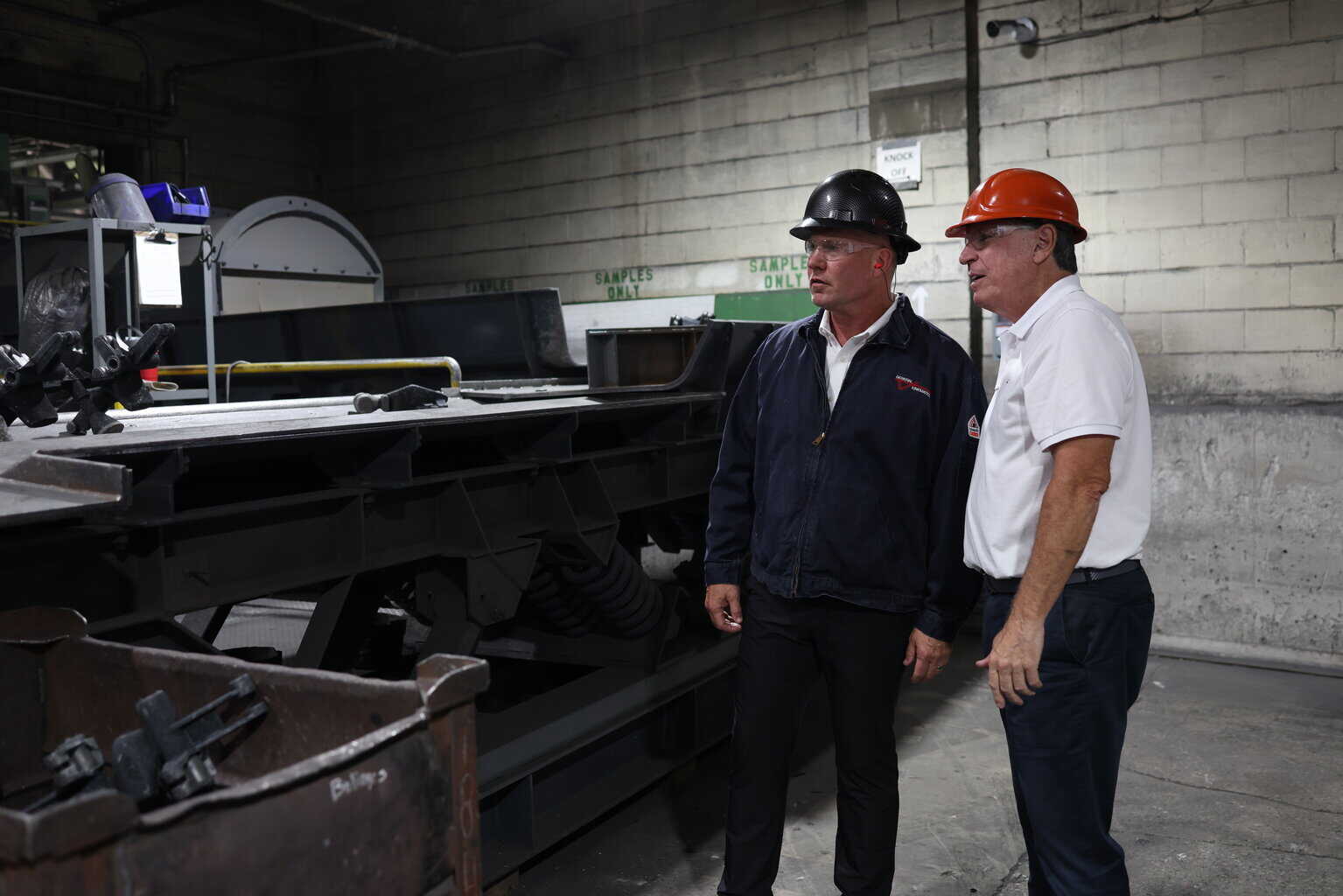
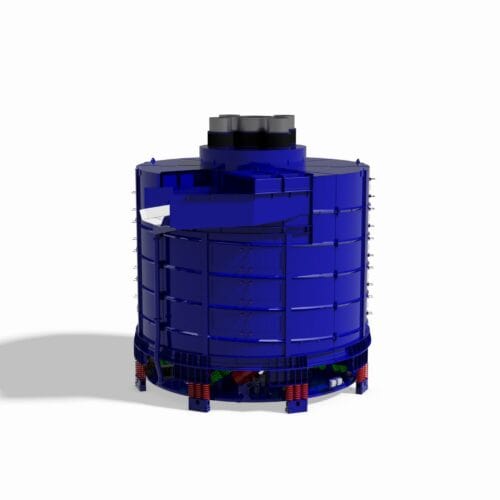
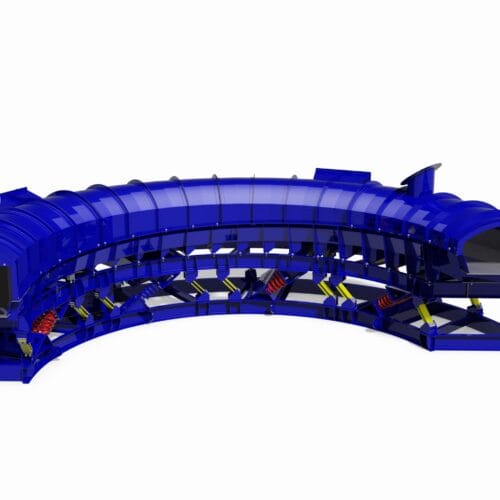
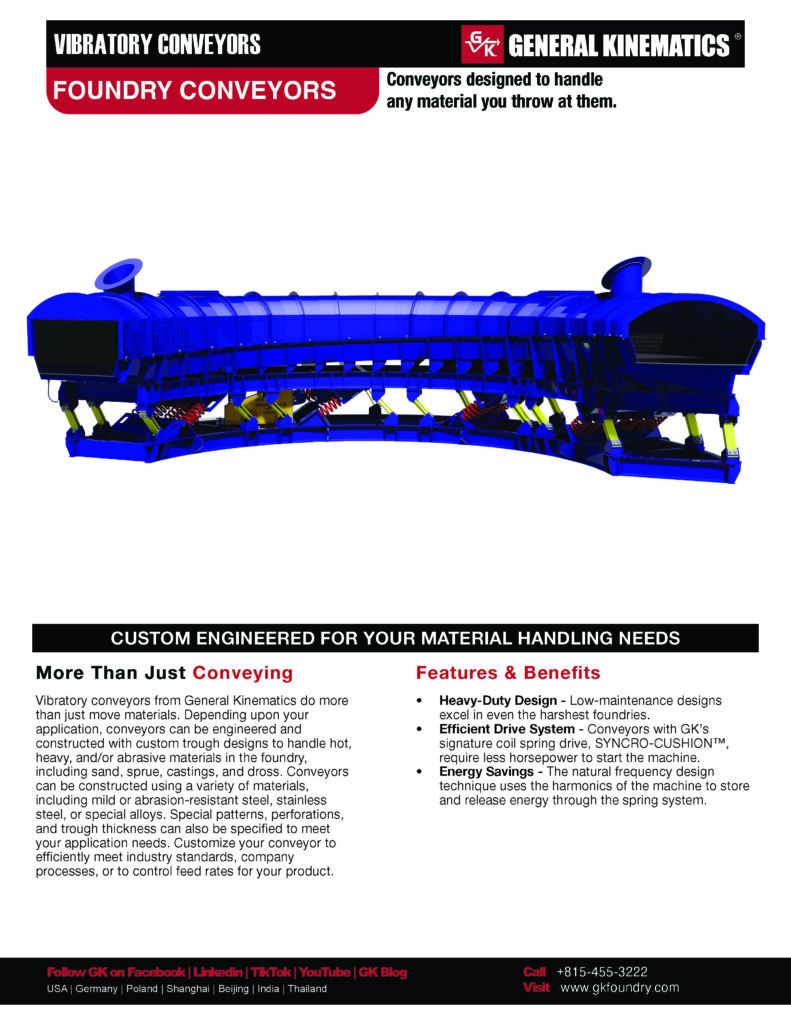
Casting Cooling Vibrating Conveyors from General Kinematics gently convey and cool castings. Custom designed cooling conveyors can include full hooding, air handling systems, stroke control, and more. General Kinematics vibrating conveyors are custom engineered and tuned to run near their natural frequency. This design allows the vibrating units to operate so that 90% of the force required to move your product is naturally created. The remaining 10% is provided using General Kinematics low horsepower, high efficiency drive system.
Vibrating casting cooling conveyors can be designed in infinite lengths and widths. For constrained space applications, view our SPIRA-COOL® Casting Cooling Spirals
- FEATURES
- BROCHURE
- CASE STUDIES
Features
- Custom designed to meet your process objectives.
- Balanced or unbalanced designs available.
- Extra Heavy-Duty for years of trouble-free service.
BROCHURE
Case studies
-

Kirsh Foundry Increases Efficiency with GK
Kirsh Foundry – Background Kirsh Foundry is a third-generation, family-owned iron-casting foundry founded in 1939 in Beaver Dam, Wisconsin. Kirsh Foundry creates cast iron casings for a wide variety of customers. The company has grown significantly, now four times its size in 1980, and has claimed its place as an industry leader. The Challenge Kirsh…
-

Waupaca Foundry and GK: Foundry Thought Leaders
Join GK on their latest trip to Waupaca Foundry in Etowah, TN and see how the General Kinematics team plays a role in the day to day operations. Follow along with GK’s Foundry Market Director, Claude Hutchens, Waupaca Foundry Engineering Manager, Steve Carr, Mill Room Superintendent, Sam McClure, Assistant Engineering Manager, Daniel Reed and…
-

Case Study: Fremax
Challenge Julio Cesar da Silva had a problem. As Engineering Manager for Fremax in Brazil, Mr. da Silva’s No-Bake Foundry was experiencing breakdown after breakdown. The equipment they were running was incapable of handling temperatures in excess of 1200°F (650°C) with the no-bake molding process in which they are producing brake discs. The equipment in…