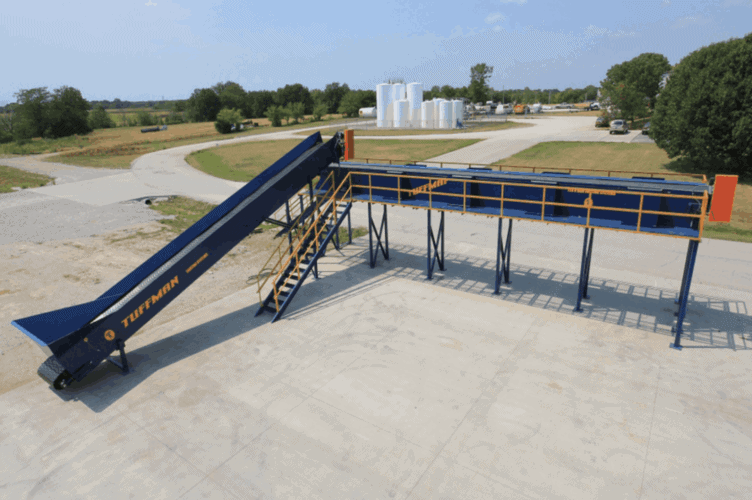


What Are Conveyor Systems?
No matter what facility you’re working in, you know that a crucial part of the operation involves material handling: manufacturing, movement, sorting, processing, and disposal. Typically, these processes are handled by a variety of conveyors, and although most conveyors can be used as standalone equipment, they are more powerful when they’re connected and integrated into conveyor systems. Conveyor Systems refer to all the pieces of conveyor equipment within a facility, including how they connect and work together to facilitate the effective handling of materials.
How Do Conveyor Systems Work?
Conveyor systems function by utilizing a continuous loop of moving belts, rollers, or chains to transport materials or goods from one point to another within a facility. The process begins with the loading of materials onto the conveyor at the input point, which can be done manually or automatically, depending on the system’s design and application. As the conveyor belt, rollers, or chains move along a predetermined path, the materials are carried along, propelled by friction or gravity. Along the conveyor route, components such as rollers, pulleys, and drives guide and support the moving load, ensuring smooth, efficient transportation. Depending on the specific requirements of the application, conveyor systems can be configured with additional features such as sorting mechanisms, diverters, sensors, and controls to facilitate material handling tasks such as sorting, merging, diverting, or accumulating. Finally, the materials are unloaded from the conveyor system at the output point, either manually or automatically, completing the transportation process. Conveyor systems provide a reliable and versatile solution for efficiently moving materials or goods within industrial facilities, contributing to increased productivity, reduced labor costs, and improved workflow efficiency.
Benefits of Conveyor Systems
Conveyor Systems can increase efficiency, productivity, and consistency while also improving employee safety. Firstly, standalone conveyors often require operators to manually transport materials between conveyors for different stages of processing. Conveyor systems are more efficient because they automatically move material between conveyors or machines within the overall system, freeing operators for other tasks and improving productivity.
Types of Conveyor Systems
Conveyor systems are typically utilized to improve efficiency and consistency with manufacturing, sorting, and recycling. Most conveyor systems are customized, designed for the space constraints and specific needs of a facility. Depending on the task at hand, there are a few options for conveyors that may be part of the conveyor system, and conveyors may be installed horizontally or at various inclines to connect the conveyors throughout the system.
Belt Conveyors:
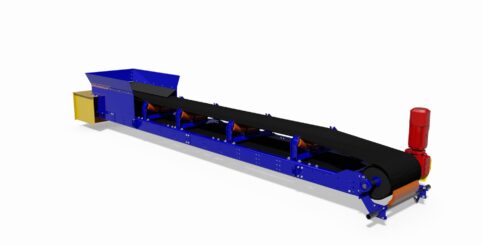
Belt/horizontal conveyors use a continuously moving belt to move products along the machine. The conveyor belt will be stretched across between rollers at each end, which creates tension to place the product onto and move it along. This type of conveyor is similar to what you see at the grocery store checkout. Belts are commonly made out of rubber, plastic, metal, fabric, or leather. The belt’s thickness will be determined by the load’s size and weight.
In food processing plants and packaging facilities, belt conveyors offer a hygienic, efficient solution for safely transporting food products. We often see them used in other facilities, such as airports, assembly lines, and automated warehouses.
Roller Conveyors:
Roller conveyors don’t use belts or power to move products along. These use rollers mounted in parallel to allow goods to move freely. There are two varieties of roller conveyors, powered and non-powered. The powered rollers require more maintenance and upkeep, but can be used in more functional ways. The non-powered ones generally require the machine to be installed at an angle to utilize gravity to move the product along.
Magnetic Conveyors:
These conveyor systems use magnets to move ferrous material along a plate. The magnets are mounted beneath a stationary, non-magnetic plate and move along it. These can be used horizontally, vertically, or even upside down.
Chute Conveyors:
Chute/Trough conveyors are material handling devices that use gravity to move products from one level to another. These are used for scrap, packaging, and mail, and are designed to have low friction.
Small Belt Conveyor Systems
Mini belt conveyors are useful when transporting small or particularly delicate materials from one place to another. Even though they may not look it, they are capable of the same power as large belt conveyors, with increased precision and delicacy.
Because of their small size and ability to move delicate materials, small conveyors are easy to maintain and sanitize.
This makes small belt conveyor systems useful in medical and research facilities for sorting and transporting pharmaceutical materials, glass parts, or surgical equipment.
These systems are also useful in construction and demolition facilities where fine materials, such as sand or dirt, need to be moved.
Small belt conveyor systems are especially useful and efficient in tight spaces. Whether you have limited space in a warehouse or processing area, or you’re working in a small area like a basement, crawlspace, or pipe system, having a small belt conveyor can improve productivity without getting in the way.
Conveyor Systems for Your Facility
If a conveyor system seems like the ideal solution for your needs, contact our experts to discuss creating the perfect system for your facility. With the combination of our high-performance horizontal conveyors, inclined conveyors, or troughing conveyors, we will help you find the right system and solution for your needs. Contact us now!