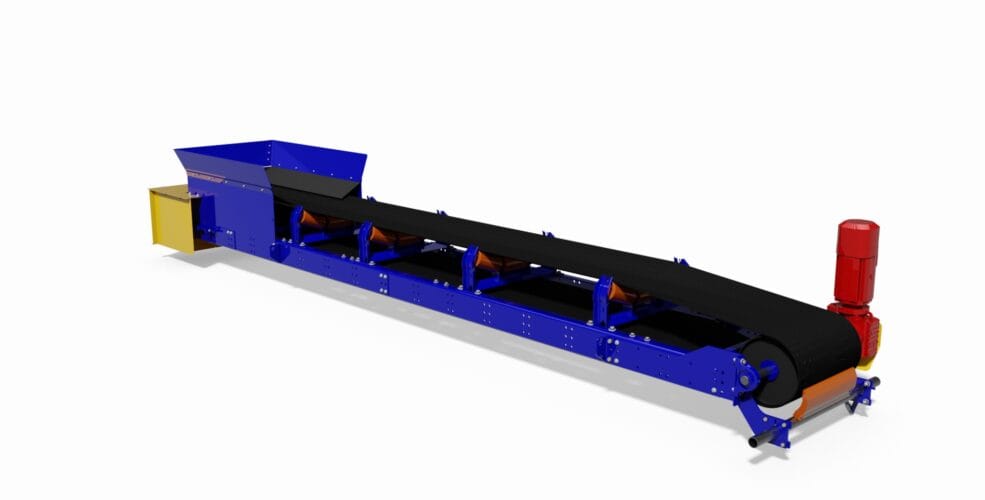


Belt conveyors are a simple type of conveyor used to move product from one place to another, using a belt attached to a pulley. As the pulley turns, the rubber belt pulls the product along the conveyor. Multiple belt conveyors, when combined, form a conveyor system that can move materials through the entire process lifespan with minimal human intervention. An efficient conveyor system will mostly require an employee to control the conveyor and supervise for mechanical errors, greatly reducing the labor needed to move material between processing areas.
Keep reading to learn about the different types of conveyor belts and which ones are right for you and your facility’s needs.
Types of Conveyor Belts
There are a variety of conveyor belt types suited to different spaces, materials, and processes.
There are several different materials that the belt itself can be made of; most commonly, industrial conveyor belts are made of rubber, but they can also be made of metal, plastic, or fabric. The structural parts of the conveyor can also be made from metal or plastic, offering different levels of durability and load-bearing capacity.
Belt conveyors also come in a variety of sizes – conveyor length, conveyor height, and belt width. Which size you need most often depends on the facility space where the conveyor needs to go, and the size of the conveyors that will connect to it as part of the system.
Belt conveyors also come with different controls: some conveyors allow you to change the speed of the belt, while others move at a set speed. The speed and controls you need are determined by the materials that you’re moving and the processes and environment surrounding this conveyor.
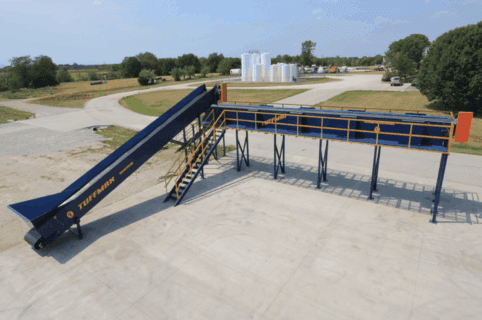
There are also several different configurations or additional aspects of belt conveyors to consider. Horizontal belt conveyors are commonly used to move material through a facility, but if you need to move material between levels, an inclined belt conveyor will be a better fit. There are also belt conveyor options, such as side rails to keep products contained, and system components that help sort products on the conveyor.
Roller Bed Conveyor Belts
Roller bed conveyor belts feature rollers with specific measurements and durability, designed to meet production needs. The weight and speed of the product moving along the production line are factors to consider when selecting the optimal conveyor belt.
These conveyor belts are best for items added to the conveyor by gravity, as manual loading can damage the rollers due to mechanical shock.
Suitable uses for roller bed conveyors are packing, assembling, transporting, and sorting items. You are likely to find a roller bed conveyor in an airport.
Flat Belt Conveyors
Flat belt conveyors are composed of a system of powered pulleys that move a looping flat belt. The belt can be made from a variety of materials, both natural and synthetic, such as polyester or nylon.
Flat belt conveyors are great for transporting items throughout a facility, making this system a common choice today. Because the belt material can vary, there is a lot of flexibility in the objects being transported, making this a great option for small, fragile, and nonuniformly shaped items.
Suitable uses for flat belt conveyors include slow-moving assembly lines, wash-down areas, and internal transportation within an industrial facility.
Troughing Conveyors
Troughing conveyors use a heavy-duty, continuous belt that rolls on troughed carry idlers to transport bulk materials. Troughing idlers consist of a central roller with winged rollers on either side, creating a “trough” or shallow channel ideal for carrying bulk materials.
Suitable uses include any transportation of bulk and raw materials, such as a recycling facility transporting glass and rubber, or the mining industry transporting large rocks and other natural materials.
Horizontal Slider Conveyors
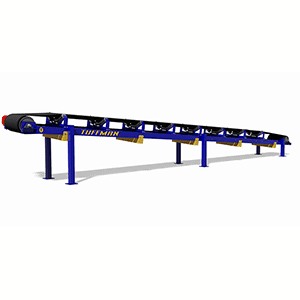
Horizontal slider conveyors use a belt that slides along a solid surface rather than being supported by rollers. The surface the belt slides on is typically steel, but can be made from another specialty material depending on the materials being transported.
This type of conveyor belt is great for transporting materials around the facility.
Suitable uses include assembly and production lines, food handling, beverage product conveyors, and unloading trucks and trailers.

Inclined Slider Conveyors
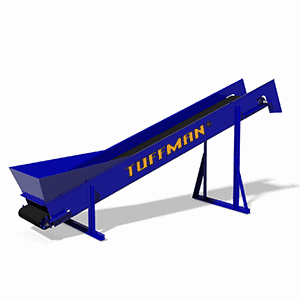
Inclined slider conveyors are similar in configuration to horizontal slider conveyors, using a belt that slides along a solid surface rather than being supported by rollers; the main difference is that inclined slider conveyors provide an increase in elevation.
Inclined slider conveyors are optimal for transporting items from one floor to another, to and from sorting stations and trommel screens, and in moving fragile materials.
Suitable uses for inclined slider conveyors include the automotive, transportation, manufacturing, and recycling industries.
Why Choose Tuffman Belt Conveyors
Choosing the right type of conveyor belt for your facility can be overwhelming, given the many options. That’s why our experts are here to help. We can help you choose – or create – the best belt conveyor products for any industry, space, or material.