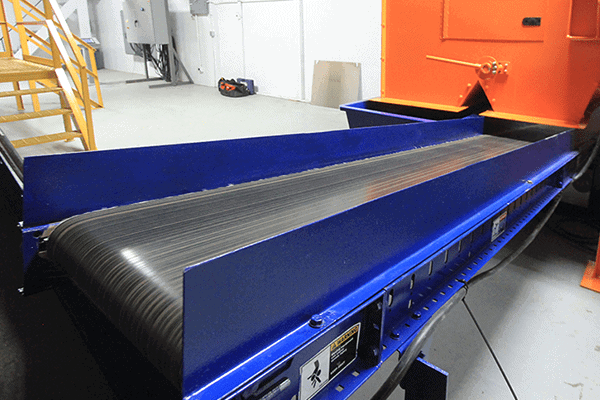


Even the best conveyor belts need repairs to avoid replacement or breakdown. Stopping a production line for a conveyor belt repair is always an inconvenience, but it is essential. While minor damage, such as frayed edges and tears, may seem insignificant, it can worsen if ignored. The nature of the rigorous work of conveyor belts means daily repairs can be expected. What is important, however, is knowing what methods of conveyor belt repair are available.
Types of Conveyor Belt Damage
While any belt damage is frustrating, certain types are more significant than others. A simple fray, for example, can be trimmed, and the belt can continue performing its daily tasks. However, rips or tears are often indicative of an immediate failure to run and will likely lead to a full replacement.
Although there is no one simple way to evaluate conveyor belt damage, the National Industrial Belting Association (NIBA) came up with a simple rule of thumb to help determine the belt’s repair: If the belt has suffered no more than 25% damage to its width, then a repair can proceed. When more than 25% of damage has occurred, a replacement is most likely the best option.
Methods of Conveyor Belt Repair
Vulcanization
This method of conveyor belt repair uses heat and pressure to re-splice the damaged belt. If the belt’s cover material is thermoset rubber or thermoplastic, then this is the most reliable and efficient repair technique.
While both materials produce results effectively, their processes differ slightly. Thermoset rubber requires a lower heat of around 250°F and an hour-long cooling period. Thermoplastic, on the other hand, uses a higher heat of approximately 375°F with a shorter cooling time of about 5-10 minutes.
Vulcanization is often the first choice for maintenance managers and is one of the few methods that can restore the belt’s original strength. While this method will be successful if used, those working with food-grade belts may need to spend extra time deciding whether vulcanization is needed. For the most part, to maintain sanitation, replacing thermoplastic food-grade conveyor belts is the best option when damage occurs.
Metal Fasteners
This method of conveyor belt repair is known for its speed of application. While metal fasteners don’t offer the same strength as vulcanization, they are a quick and easy alternative. That said, the lacing has been known to pop up on metal fasteners, making them unsuitable for food-grade belts.
The nature of this type of repair means it should be used only temporarily until the belt can be replaced or a more long-term repair method is used. Given the unreliability of this method, it should not be used as a permanent repair solution.
Cold Curing Conveyor Belt Repair
Cold curing is often the last resort and is considered the least desirable. A two-part cement, consisting of a compound and a curing agent, is used to solidify the surface.
This repair method is used when vulcanization isn’t possible due to space constraints. It is one of the longest methods of repair, taking up to 36 hours for the curing agent to set solid. The cement used can also be too rigid, preventing the conveyor belt from operating at its maximum capacity. Cold curing is often a last resort when other repair methods are unavailable.
Dutchman Repair
The Dutchman repair method requires the maintenance manager to remove the damaged section of the belt. This is done by squaring the belt away at equal distances on both sides of the damaged area. Once the section is removed, a new section is spliced using the vulcanization method.
Repair Vs Replacement
The methods listed above are not intended to replace the belt. While repairs are often more cost-effective than replacement, they should be used as a temporary measure. This is especially true for food-grade belts, which require sanitation that can’t be guaranteed with simple conveyor belt repairs. Any food-grade conveyor belt that is damaged should be replaced, not repaired.
Tuffman Conveyor Belts
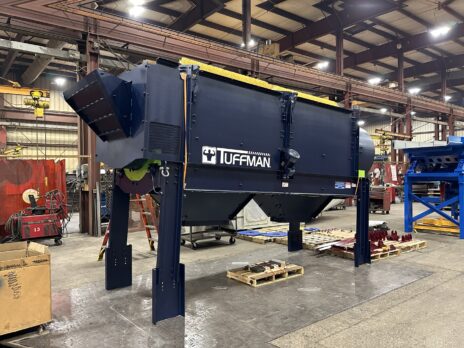
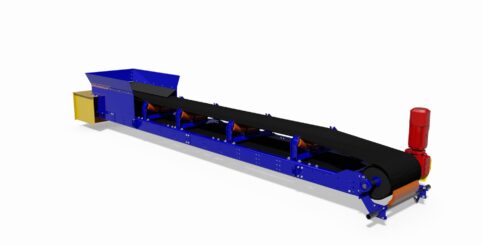
From simple conveying to complete sorting systems, Tuffman provides a cost-effective solution for you. Tuffman works with you to evaluate your requirements and then delivers equipment to help you meet your material processing needs. From troughing conveyors to inclined slider conveyors, Tuffman has you covered.