
Case Studies
Latest Posts
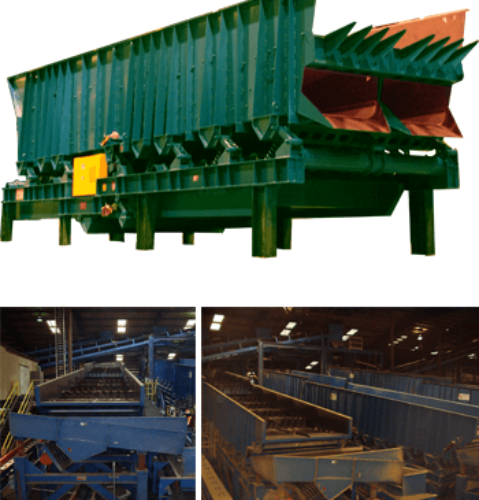

Case Study: OSB Product Improvement
Challenge
Customer required a process to separate the low grade lumber "fines" and smaller pieces of wood chips from the more desirable large OSB (Oriented Strand Board) strands to increase the quality and strength of their finished product.
April 19th, 2011 | < 1
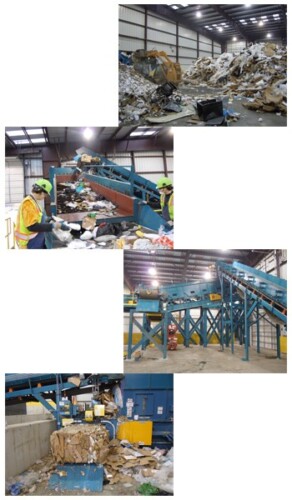
Case Study: OCC Recovery
Challenge
A waste recycling facility was looking to recover mainly OCC (Old Corrugated Cardboard) from his waste stream. They saw the value in recovering this product, but were presently manually sorting the material off of the floor on a daily basis. Even with floor sorting, the customer was able to recover in the neighborhood of 10-12 bales per day.
April 19th, 2011 | 2 min Read

Case Study: Wireless Controlled, Four...
Challenge
A unique secondary aluminum producer, located in Kentucky, had recently purchased a more efficient rotary furnace to improve their foundry production. Optimum efficiency requires the furnace doors to be opened and closed in the shortest amount of time to maintain heating efficiency. To feed the new furnace, the current process involved multiple runs using a front end loader to weigh material and charge the furnace to capacity, leaving the doors open for an extended amount of time. The resulting loss of heat makes the process less efficient. With the loader having to travel 90 feet to the furnace, and then lifting up 48 inches to charge the furnace, the end user needed to find a better solution to charging their furnace.
April 19th, 2011 | 2 min Read

Case Study: Equipment Refurbishment
Challenge
A GK customer purchased a used VIBRA-MILL® Sand reclaimer sight unseen from a closed foundry in the south and wanted to use it to break down sand for pneumatic conveying. The VIBRA-MILL®, originally commissioned in 1975, was of unknown condition.
April 19th, 2011 | < 1

Case Study: Petroleum Coke Dewatering
Challenge
Petroleum coke (often abbreviated Pet coke or petcoke) is a carbonaceous solid derived from oil refinery coker units or other cracking processes. Petroleum coke is typically created in a drum and solidifies. Once the products cooling cycle is complete, the coke is hydraulically cut from the drum and transported to a pad or pit, where the water then separates from the coke. It then can be loaded to barge or railcar for shipping to its next destination.
April 19th, 2011 | < 1
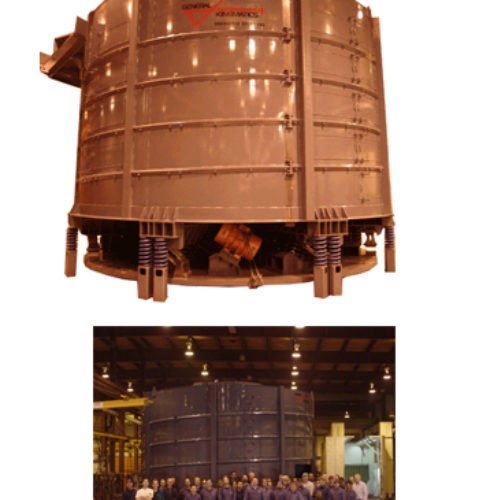
Case Study: Casting Cooling Solution
Challenge
Customer needed a process in which castings could be cooled within an efficient space and time period with no transmittal of force to the environment as was being experienced from vibratory units provided from past suppliers, and without a re-design of the existing plant footprint.
April 19th, 2011 | < 1